
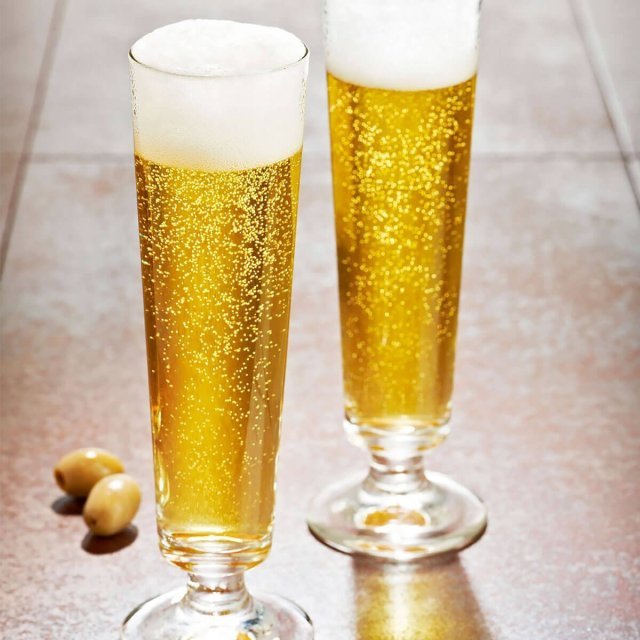
BrewersFriend. (n.d.). Czech Pilsner [Image]. Retrieved September 1, 2023, from https://www.brewersfriend.com/images/1/0/3/4/0/0/6/Czech-Pilsner.jpg
It’s that time again! Next up on the BJCP category brew-down, we are tackling the delicious Czech Pale Lager, category 3A.
After researching this beer, I have to admit I may have found a new favorite style. Let’s be real here, any beer with Czech in the name means it will have some depth in hop and malt notes while still being insanely refreshing.
History
The history of the Czech Pale Lager really is intertwined with the Pilsner. Let’s go way back in time by almost 730 years!
In 1295, King Wenceslaus II granted 260 citizens of Plzeň the right to brew beer in their homes, a privilege that led to a boom in brewing activity in the city. However, by the 1830s, beer quality in Plzeň had become inconsistent. In response, the city’s brewers decided to build a new, state-of-the-art brewery: the Burghers’ Brewery (Bürgerbrauerei)
In 1842, the Burghers’ Brewery hired a young Bavarian brewer named Josef Groll. Drawing from the lager brewing traditions of Bavaria, Groll combined the rich Bohemian malt, soft Plzeň water, and aromatic Saaz hops with a bottom-fermenting yeast to brew the first batch of what became known as Pilsner beer on October 5, 1842.
What? Bürgerbrauerei doesn’t sound familiar? How about Pilsner Urquell? Bürgerbrauerei would be renamed Pilsner Urquell! I bet that rings a bell.
Interesting Facts:
- Wars, especially World War II, and the subsequent communist regime in Czechoslovakia, posed challenges to the brewing industry. However, the traditions persisted, and the Czech Republic remains one of the highest beer-consuming countries per capita in the world.
- While the Czech Republic has always been synonymous with lagers, the global craft beer movement has also influenced the country. Today, alongside traditional lagers, you’ll find a range of beer styles being brewed.
- To protect its legacy, “Czech Beer” and “Czech Lager” have been recognized as Protected Geographical Indications by the European Union, ensuring that the traditions and quality associated with these names are upheld.
- The popularity of Pilsner also coincided with the advent of clear glassware. The beer’s bright, clear appearance made it visually appealing, further boosting its popularity.
- The expansion of the railroad network and the advent of refrigeration in the 19th century allowed Pilsner-style beers to be transported further without spoiling, expanding their reach across Europe and eventually to other continents. Before this, dry hopping was really the only way to help prevent spoilage during long treks. People would toss in handfuls of “dry hops” (quite literally these hops were dried) into barrels, utilizing hops natural antiseptic properties to ward off pathogens and bacteria.
- The success of the Pilsner from Plzeň led to many imitations. Breweries around the world began producing their versions of Pilsner, leading to a broad category of Pilsner or pale lagers.
Category Guidelines
The BJCP guidelines for this style list the following:
Overall Impression: A lighter-bodied, rich, refreshing,
hoppy, bitter pale Czech lager having the familiar flavors of the
stronger Czech Premium Pale Lager (Pilsner-type) beer but in a
lower alcohol, lighter-bodied, and slightly less intense format.Aroma: Light to moderate bready-rich malt combined with
light to moderate spicy or herbal hop bouquet; the balance
between the malt and hops may vary. Faint hint of caramel is
acceptable. Light (but never intrusive) diacetyl and light, fruity
esters are optional. No sulfur.
Appearance: Light yellow to deep gold color. Brilliant to very
clear, with a long-lasting, creamy white head.
Flavor: Medium-low to medium bready-rich malt flavor with
a rounded, hoppy finish. Low to medium-high spicy or herbal
hop flavor. Bitterness is prominent but never harsh. Flavorful
and refreshing. Low diacetyl or fruity esters are optional, but
should never be overbearing.
Mouthfeel: Medium-light to medium body. Moderate
carbonation.
Characteristic Ingredients: Soft water with low sulfate and
carbonate content. Traditional Czech hops. Czech Pilsner malt.
Czech lager yeast. Low ion water provides a distinctively soft,
rounded hop profile despite high hopping rates.
Style Comparison: A lighter-bodied, lower-intensity,
refreshing, everyday version of Czech Premium Pale Lager.
BJCP Beer Style Guidelines – 2021 Edition 5
Vital Statistics: OG: 1.028 – 1.044
IBUs: 20 – 35 FG: 1.008 – 1.014
SRM: 3 – 6 ABV: 3.0 – 4.1%Beer Judge Certification Program. (2021). 2021 Style Guidelines. [PDF]. https://www.aiche.org/sites/default/files/community/aiche-community-site-files/3181881/2021guidelinesbeer1.pdf
Commercial Examples: Bernard světlé pivo 10, Březňák
světlé výčepní pivo, Notch Session Pils, Primátor Antonín
světlé výčepní, Radegast Rázna 10, Únětické pivo 10°
Interpretation for Our Brew
So that should give you an idea of what we are aiming for here:
- Light body with moderate carbonation
- Bitter but not harsh
- Bready malt, and spicy/herbal hop flavors
- Light yellow to deep gold color
- Brilliantly clear
Immediately I notice the tolerances within this style are very forgiving, at least as far as color, bitterness and flavor go.
Light to moderate bready-rich malt combined with
light to moderate spicy or herbal hop bouquet.Light yellow to deep gold color.
Medium-low to medium bready-rich malt flavor with
a rounded, hoppy finish.Low to medium-high spicy or herbal
hop flavor.…the balance
between the malt and hops may vary.
So in theory, you could have a little or quite of bit of bready notes and spiciness and herbal aroma and flavors from hops. That means we have a whole lot of variation to play with. You could even have a touch of diacetyl or fruity esters in this beer and still be on point.
Sounds delicious.
Ok, let’s run down through the guidelines and build our recipe.
Malt
“Up to moderate breadiness from malt and light colored”, combined with the origin of this style already has me thinking floor malted bohemian pilsner malt! I find that with floor malted pilsner malt, I get a lot more bready/grainy flavor than I would from 2-row or even just good old pilsner malt. For this recipe, the vast majority of the bill is coming from this malt; right about 90%. I will add a small amount of melanoidin to mimic a triple decoction and acidulated to help reduce the amount of acid needed in the mash.
Let’s dig into that for a moment, why does floor malted pils taste different anyway?
- Traditional Malting Process: Floor malting is one of the oldest methods of malting barley. In this process, the barley is spread out on large floors and turned by hand or with simple tools. This method allows for a slower and more uneven germination compared to modern pneumatic malting systems. The uneven germination can lead to a broader spectrum of flavors.
- Modification Levels: Floor-malted grains often have a more uneven modification due to the traditional malting process. This uneven modification can result in a mix of under-modified and over-modified grains, which can contribute to the malt’s rich and complex flavor profile.
- Kilning: The kilning process for floor-malted malts might be different from that of modern malts. Traditional kilning methods, which might be used for floor-malted grains, can impart different flavors to the malt compared to modern, controlled kilning processes.
- Terroir: The Bohemian Pilsner malt is often made from specific barley varieties grown in the Bohemian region. The soil, climate, and growing conditions of this region can influence the flavor of the barley, and subsequently, the flavor of the malt.
- Enzymatic Activity: Floor-malted malts might have different enzymatic activities compared to modern malts. This can affect the flavor profile, especially when used in mashing and brewing.
- Perception: The perception of “bready” and “grainy” flavors can also be influenced by the brewing process, yeast strains used, fermentation conditions, and other ingredients in the beer. Additionally, the knowledge that a beer is made with floor-malted malt might influence a taster’s perception.
Hops
Enough of that for now, let’s get to hops:
I always look for trigger words that point me to different varieties. In this case, with spicy and herbal notes for a Czech beer, I would be way off track if I did not immediately think of Noble Hops! In particular, because this is a Czech brew, Saaz being a Noble Hop with its spicy and herbal notes fits the bill. Saaz is a variety tha tactually originated in the Czech Republic, specifically in the Žatec region. The Czech Republic has been cultivating hops since at least 859 AD!
In my case however, I want a pronounced bitterness, and the Saaz I have is only 2.7% AA, so I am going to do the unthinkable and pair a nice bittering hop and rely on late Saaz additions to provide spicy and herbal qualities. After checking the freezer, I have a pound of 13.2% Galena on hand. Galena is an American hop and normally would never make it into a beer like this, but that’s what I have to work with today. Adding lots of Saaz at 15 and end of boil will contribute a lot of spiciness!
Yeast
Next we need to consider yeast. I am not going to overthink this, and use the tried and true 34/70 lager yeast. This stuff can ferment at room temperature and produce a clean beer. Due to the delicate nature of a Czech Pale Lager however, I will cap temperature at 59F.
Water
And finally, we need water. Many people create water profiles around the Pilsen regions famously soft water. I’m talking SOFT, as in at most, single digits for your common salts. There’s a problem with this though. Ever heard of beer stone?
Beer stone is formed from oxalates and calcium. Both of which are present in malt, plants, seeds and nuts. When consumed it causes many problems in humans and other animals, including inflammation, kidney stones and reduced bioavailability of nutrients.
Oxalates and Beer Stone
Why is oxalate even in these organisms to begin with?
- Defense Mechanism: One of the primary reasons for the presence of oxalate in seeds and nuts is as a defense mechanism. Seeds are the reproductive units of plants, and their preservation is crucial for the continuation of the species. When consumed by herbivores, the oxalate can bind to calcium and other minerals in the digestive system, reducing their bioavailability and potentially leading to nutritional deficiencies. This can deter animals from consuming large quantities of the seeds or nuts.
- Calcium Regulation: Oxalate can bind to calcium to form calcium oxalate. This binding can help in regulating the levels of free calcium ions in plant cells, which is essential for various cellular processes. Seeds, being the embryonic stage of plants, have active metabolic processes and might require precise calcium regulation.
- Metal Detoxification: Oxalate has the ability to chelate or bind to various metals. This can help plants sequester and detoxify potentially harmful metals, ensuring that the developing embryo in the seed is protected from toxic metal concentrations.
- Energy Storage: While the primary energy storage molecules in seeds are typically fats, starches, and proteins, some researchers speculate that oxalate might also play a role in energy storage, though this is a less established idea.
- Influence on Germination: The presence of oxalate might influence the immediate environment around the seed during germination, potentially affecting water uptake or microbial interactions.
So now that you know what oxalates are, and that they are present in malt, what is the problem? Beer stone.
- Calcium and Oxalate Sources: The primary components of beer stone are calcium (Ca²⁺) and oxalate (C₂O₄²⁻). Calcium is naturally present in brewing water and malt. Oxalate, on the other hand, is primarily derived from the malt. During the mashing process, the breakdown of certain compounds in the malt releases oxalate into the wort.
- Precipitation: When the concentration of calcium and oxalate ions in the beer reaches a certain level, they combine to form insoluble calcium oxalate. This compound precipitates out of the solution and adheres to surfaces, forming the hard beer stone deposits. This can ruin your equipment.
- pH Influence: The pH of the beer and the brewing water can influence the solubility of calcium oxalate. In general, as the pH decreases (becomes more acidic), calcium oxalate becomes less soluble, leading to increased beer stone formation.
- Temperature Influence: Cold temperatures can also promote beer stone formation. This is why beer stone is often found in equipment that is exposed to cold conditions, such as fermenters during cold crashing, beer lines in keg systems, and inside kegs themselves.
- Other Factors: The presence of proteins and other organic materials in the beer can act as nucleation sites, promoting the formation and deposition of beer stone.
Yeah, beer stone is a problem. Here is where the recipe comes into play. Knowing the above, that pH and solubility greatly impact formation of beer stone, we can combat this with adequate additions of calcium to the mash! The mash is where most beer stone is formed, since that is where oxalates are released. A general rule of thumb is to ensure at least 40ppm of calcium is present in the mash to prevent its formation.
Just know that by only adding it to the mash, when we sparge the concentrations of calcium will be greatly reduced. Therefore, I decided to add just barely 40ppm of calcium to the mash, leaving only 23ppm in the finished beer.
So here is our water profile I used:

I kept a bit of HCO3 to influence a slightly moderate mouthfeel. Sulfates tend to not play well with Noble Hops, so those were cut down to just 2ppm. The chloride is high due to adding Calcium Chloride to influence calcium concentrations (I favored Chloride over Sulfate), I fully acknowledge that, but we will see how it turns out and adjust for next time!
A word of advice, steer clear of Calcium Carbonate (Chalk) in this recipe. It is uncalled for especially since the guidelines specifically say the beer should be very low in carbonates.
Recipe
Target:
- 5.5 Gallons
- Efficiency: 70%
- ABV: 4.1%
- OG: 1.036
- FG: 1.005
- SRM: 4.4
- IBU: 33
- BU/GU: .91
Malt:
- Floor Malted Bohemian Pilsner 2L: 94%
- Melanoidin 26.8L: 3.6%
- Acidulated 1.7L: 2.2%
Hops:
- 0.7 oz Galena 13.2% AA (at 30 min, about 26.6 IBU)
- 1 oz Saaz 2.7% AA (at 15 min, about 5 IBU)
- 1 oz Saaz 2.7% AA (at 3 min, about 1.3 IBU)
Misc:
- Nutrient @ 10 Minutes (Boil)
- Whirlfloc @ 5 Minutes (Boil)
- Clarity Ferm (Primary)
- ALDC (Primary)
Yeast:
- Fermentis 34/70 (2 Packets)
Mash:
- 152F – 75 Minutes
Fermentation Profile:
- Primary @ 59F for 14 Days
- Cold Crash @ 34F for at least 5 days
- Condition at least one week
Brew Day
Brew day went very well!
Key metrics:
- Mash pH: 5.3
- Mash Efficiency: 80%
- Starting Gravity: 1.041
- Fermenter Volume: 5.75 gallons
Clearly I need to dial in my numbers better. Something changed about 4 brews ago, and I haven’t quite dialed it back in yet. I have a feeling this is due to the gap setting slipping on my Cereal Killer grain mill. Although, I made a point to stay below 4 rotations per second on the grind speed this time. I will test this out on the next brew without changing any other variables!


Leave a Reply